
Synthetic vs Conventional Oil in Erbil Heat
7 September 2026 · 6 min read
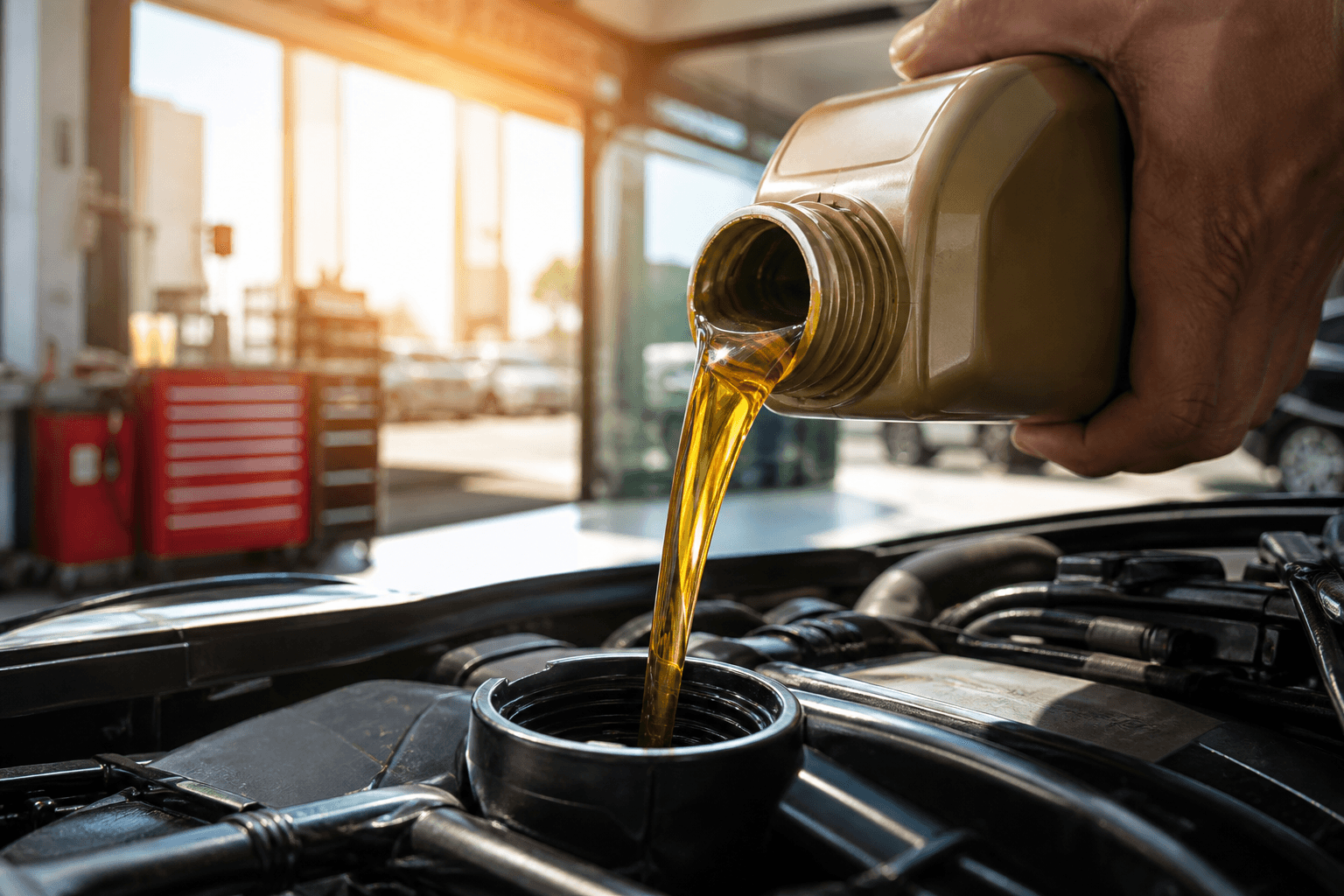
Summer in Erbil pushes engine oil hard: under-hood temperatures climb, stop-and-go traffic keeps heat trapped, and dusty roads load the filter. Drivers often ask whether conventional oil is “good enough” or whether full synthetic is worth the extra cost. The short answer: for most cars we service in Erbil, synthetic (or a quality synthetic blend) handles heat better — but only if the viscosity and specification match your engine.
What “conventional” and “synthetic” actually mean
- Conventional oil: refined from crude petroleum. Solid protection when fresh, but it breaks down and thickens/thins faster under high heat and stress.
- Full synthetic: engineered base oils with stronger additive packages. More stable at high temperature, better cold flow, and usually longer usable life when you follow a sensible interval.
- Synthetic blend: a mix of both — a middle step in cost and heat resistance, common for daily city cars.
Why Erbil heat favors synthetic
Oil must stay thick enough to protect bearings and thin enough to circulate when the engine is cold. Extreme heat accelerates oxidation — oil turns darker, loses additives, and forms varnish-like deposits. Full synthetics resist that breakdown longer than conventional oils of the same viscosity grade. That matters on summer afternoons when you’re idling in traffic with the AC on and the cooling fans running hard.
- Better high-temperature film strength — less metal-to-metal risk when oil gets hot
- More stable viscosity — less “thinning out” in peak summer underhood heat
- Often cleaner engines over time — fewer sludge deposits if you change on schedule
- Stronger protection on highway trips out of Erbil when engines run long and hot
When conventional oil still makes sense
Older engines that already burn oil, vehicles with known leaks, or cars where the manufacturer never required synthetic can stay on a quality conventional oil — if you change it more often (often around every 5,000 km here). Don’t switch blindly: some high-mileage engines with worn seals can show leaks after moving to a thinner modern synthetic. Tell us the age, mileage, and oil history; we’ll recommend a safe step.
Grade and brand matter more than marketing
Use the viscosity your manual calls for (for example 5W-30 or 5W-40). Wrong grade hurts more than choosing “conventional vs synthetic” of the correct grade. At Nashwan Cars Service Center we stock trusted oils from brands such as Castrol, Shell, Motul, Ravenol, Liqui Moly, Valvoline, and others — and we match the oil to your engine’s specification, not just what’s cheapest on the shelf.
- Check the owner’s manual for viscosity (e.g. 5W-30) and any API / ACEA / manufacturer approval
- Prefer a known brand with a sealed bottle over unlabeled bulk oil of unknown origin
- Always replace the oil filter with the oil — a clogged filter defeats good oil
- In Erbil heat: many drivers do well on full synthetic or a quality blend at 5,000–8,000 km intervals
Practical recommendation for Erbil drivers
If your car is under warranty or the manual specifies synthetic, stick with full synthetic. For daily city driving in summer, full synthetic or a good synthetic blend is usually the better value — fewer breakdown risks and more stable protection between services. Pair it with a quality filter and don’t skip changes because the oil “still looks okay.”
Not sure which oil your car needs?
Bring your car to Nashwan Cars Service Center in Erbil (108 Industrial Street, Ankawa). We’ll check the current oil condition, confirm the correct grade and type for your engine, and service you with a quality oil and filter — with transparent pricing before any work begins.
Need service in Erbil?
Visit Nashwan Cars Service Center for quality products, honest diagnostics, and clear recommendations for your vehicle.